
After a successful flyby of the Moon, NASA’s Artemis mission is winding to a close with the crew expected to return by Saturday morning in Malaysian time.
Not only were the crew the first humans to witness parts of the dark side of the moon with their own eyes, they have also travelled further from earth than previous astronauts!
But why be envious of them when you can travel to some moon-like, and even alien landscapes right here on Earth!
Húsavík, Iceland
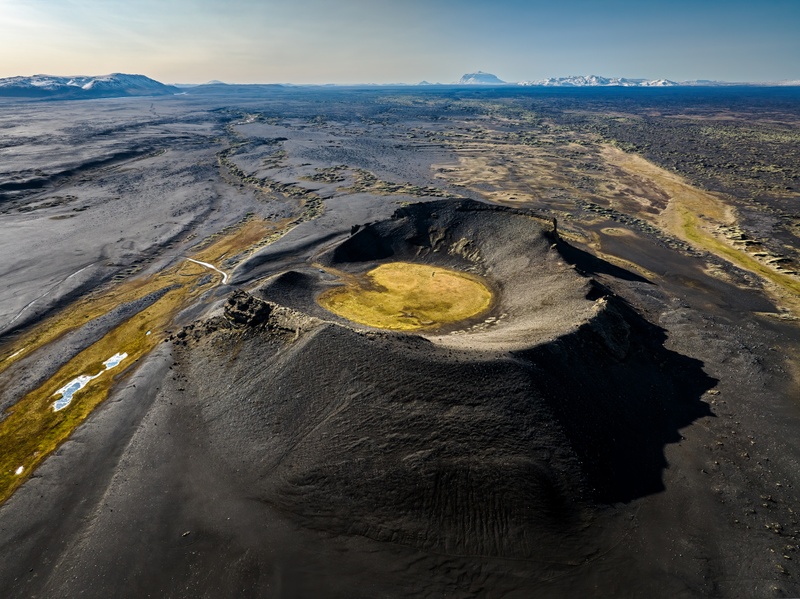
Where better to experience the Moon than the very place where NASA’s astronauts first trained?
Since the days of the legendary Apollo program, this quiet fishing village in northern Iceland and its surrounding wilderness has familiarized dozens of lunar-bound astronauts to the peculiarities of the Moon.
This is thanks to the region’s remarkably moon-like geography, with both having barren, basalt landscapes shaped by both dormant and even ongoing volcanic activity. In fact, the area is home to such diverse landscapes that some scientists have even compared it to Mars!
The bubbling hot springs of Hverarönd, the flooded aquamarine heart of Askja volcano, the barren Hrossaborg Crater and the flooded lava fields at Drekagil – us wannabe astronauts have a ton of sites to pick and choose for their faux moon expedition. Iceland’s just perfect for a road trip too!
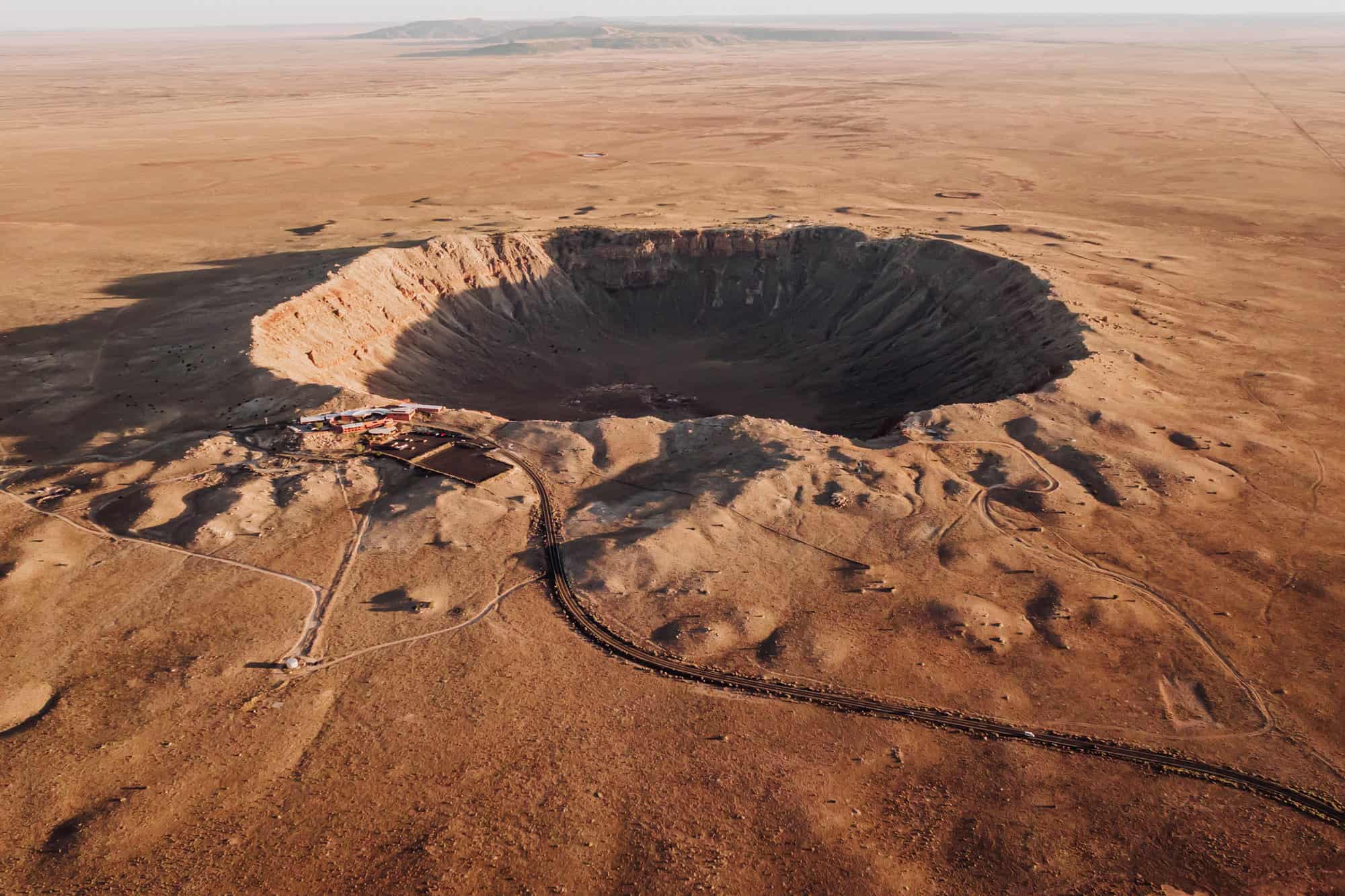
Meteor Crater, USA
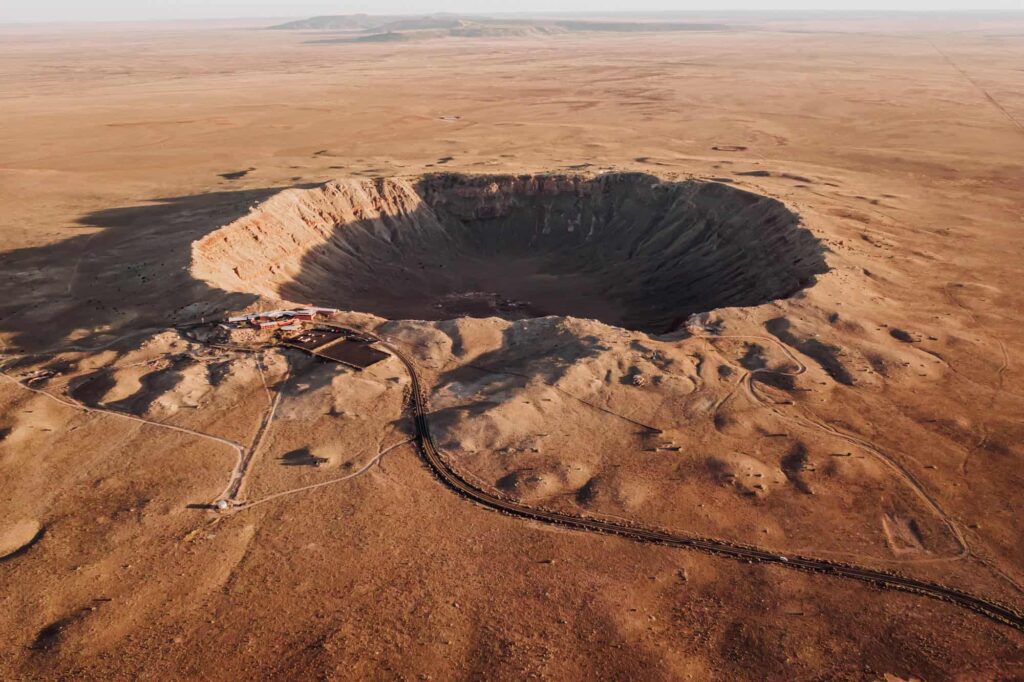
More than 50,000 years ago, a nickel-iron meteorite slammed into what was once a grassland in what is now the US state of Arizona.
Eons later, the remains of this impact would come to be known as Meteor Crater.
Since the 19th century, its dramatic ridges, scarred earth, desolate slopes and vast floor have played host to the earliest geological research into meteorite impacts on our home planet. Its arid, rocky terrain also made it suitable as an Apollo training site.
Though Meteor Crater pales in comparison to the largest and most infamous craters out there (like the Chicxulub crater that killed the dinosaurs), its remarkably well-preserved state and wealth of research make it a must-visit for moon explorers.
Sadly, the centre of the crater is off-limits due to safety and legal reasons (the crater is privately owned by the Barringer family). Still, the Meteor Crater Visitor Center features various lookout points and ridge tours to admire from afar, as well as exhibits on meteorite samples and even Apollo hardware.
Mauna Kea, USA
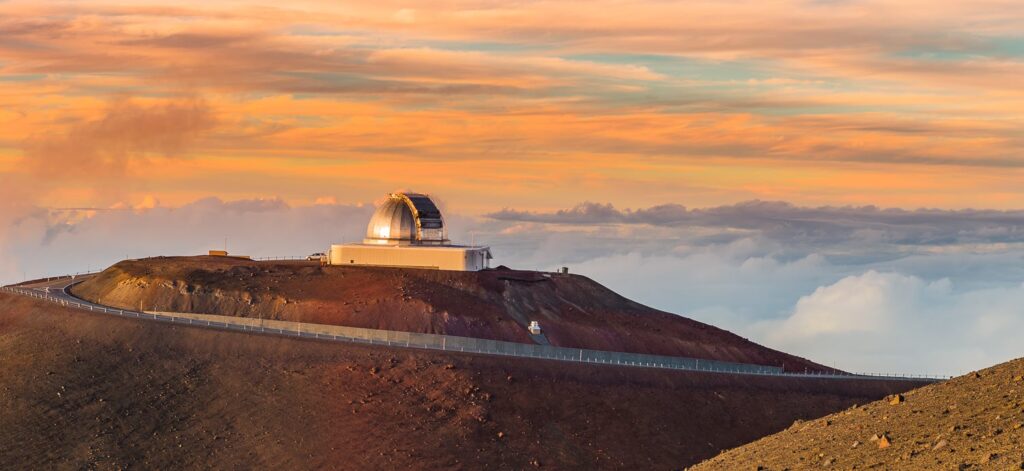
Moonscapes and snow aren’t Hawaiian icons, but they are real and reachable in Mauna Kea.
Up on the Big Island of Hawaii, Mauna Kea is a gargantuan mountain that dominates the island’s landmass and its skyline, inspiring worship by the native Hawaiians as the home of divine spirits. Even today, its alien peaks and occasional snow can still instil awe.
In fact, if measured from the sea floor, Mauna Kea even surpasses Mount Everest as the world’s tallest mountain! Naturally, this makes it the highest point of Hawaii too!
High up on its peak, rocky plateaus made out of – you guessed it- lunar-like volcanic rock coalesce into lonely peaks. Then, they fall away, giving way to a churning sea of clouds. Below, Hawaii Island and the Pacific stretch to infinity.
Besides extraterrestrial hikes and sightseeing around the Mauna Kea’s surface, you can also join a stargazing tour that’ll give you an unparalleled view of the heavens, free of any light pollution. As for the dozen or so (controversial) observatories you see, they are unfortunately not open for visitors.
Lamayuru, India
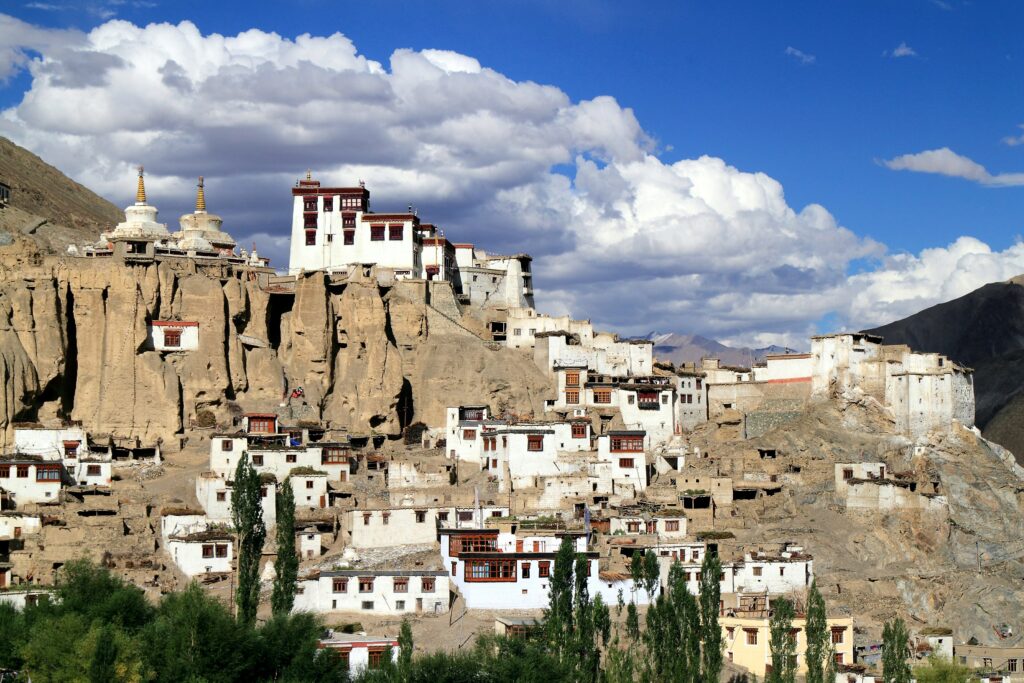
If humanity ever established a permanent home on the Moon, it would probably look like the isolated, snow white village and monastery of Lamayuru.
Contrary to popular imagination, the Moon isn’t actually a flat, featureless surface. It also has plenty of highlands, lowlands, valleys and ridges – some of which can be incredibly tall too! Which makes Lamayuru an interesting twist on our Earth’s Moon-like locations.
Located in the Indian-administered portion of the gorgeous Ladakh region, Lamayuru features a village and Tibetan Buddhist monastery perched atop lone, sheer cliffs. All around, the stark peaks and gorges of the Himalayas further lend it an air of isolation, almost as if you were in space.
Built at a staggering 3,510 meters, the Lamayuru is famed not only for its borderline impossible construction, but also its collection of Buddhist art as well as the Yuru Kabgyat – a festival featuring costumed, colourful dancers.
Caoshan Moon World, Taiwan
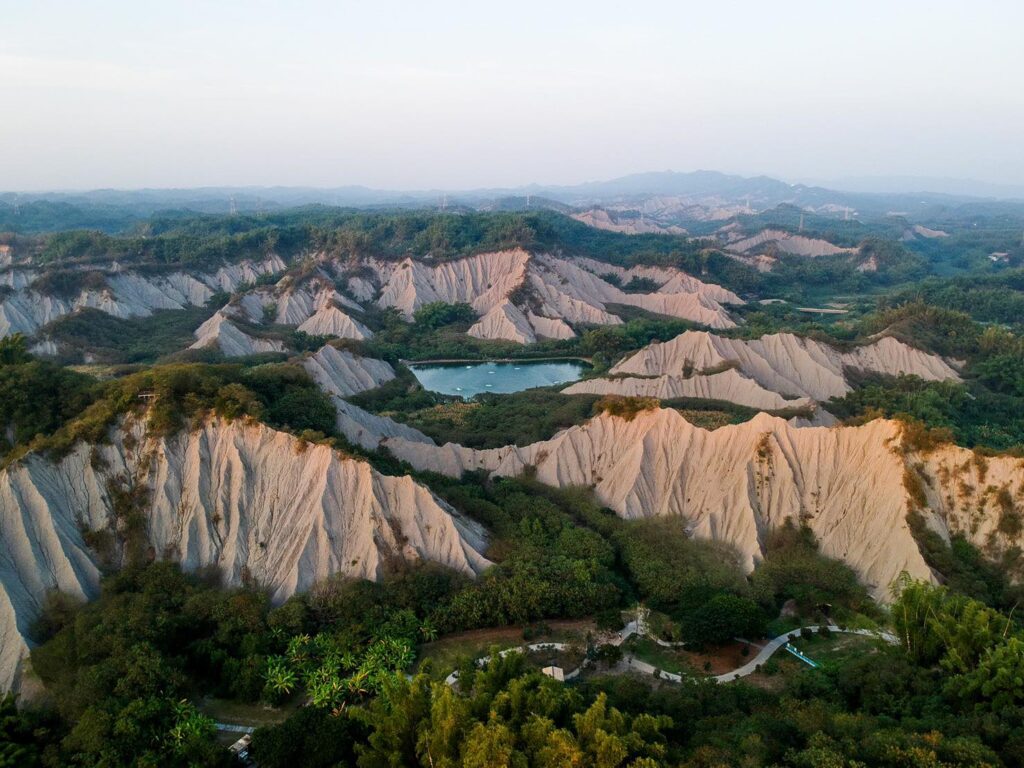
It counts if it’s in the name, right?
These series of fiercely eroded ridges or badlands can be found at the outskirts of Tainan in southern Taiwan.
Featuring sharp mudstone ridges hostile to any climber and tempered by occasional streaks of greenery, Caoshan seems more like a fantastical sci-fi moonscape, one where life has begun to sprout from a terraformed landscape.
As for why it’s so barren here, you can blame the high salinity or salt content in the ashen earth. Only the hardiest plants – i.e. the local Cizhu or Thorny Bamboo – grow here. Even then, in some areas, most never manage to completely envelop the stubborn soil.
The lunar landscapes of Caoshan are frequently veiled in mist, which can be enjoyed from vantage points such as Erliao Pagoda and 308 Peak Observation Deck. The former has most hills covered in bamboo while the latter has more exposed gray ridges.
Seeking more out-of-this-world experiences? Then you might like the wild winter snowscapes of Nikko or the alpine steppes of Northern Xinjiang. Or, you could go local with some local Malaysian stargazing spots!
Links
District Leh – Ladakh | Lamayuru – The Moonscape for Tourist
https://leh.nic.in/tourist-place/lamayuru/
Taiwan Ministry of Culture – Caoshan Moon World
https://www.moc.gov.tw/en/News_Content2.aspx?n=502&s=18353
BBC – How Iceland helped humans reach the Moon
https://www.bbc.com/travel/article/20190701-how-iceland-helped-humans-reach-the-moon


.jpg)