
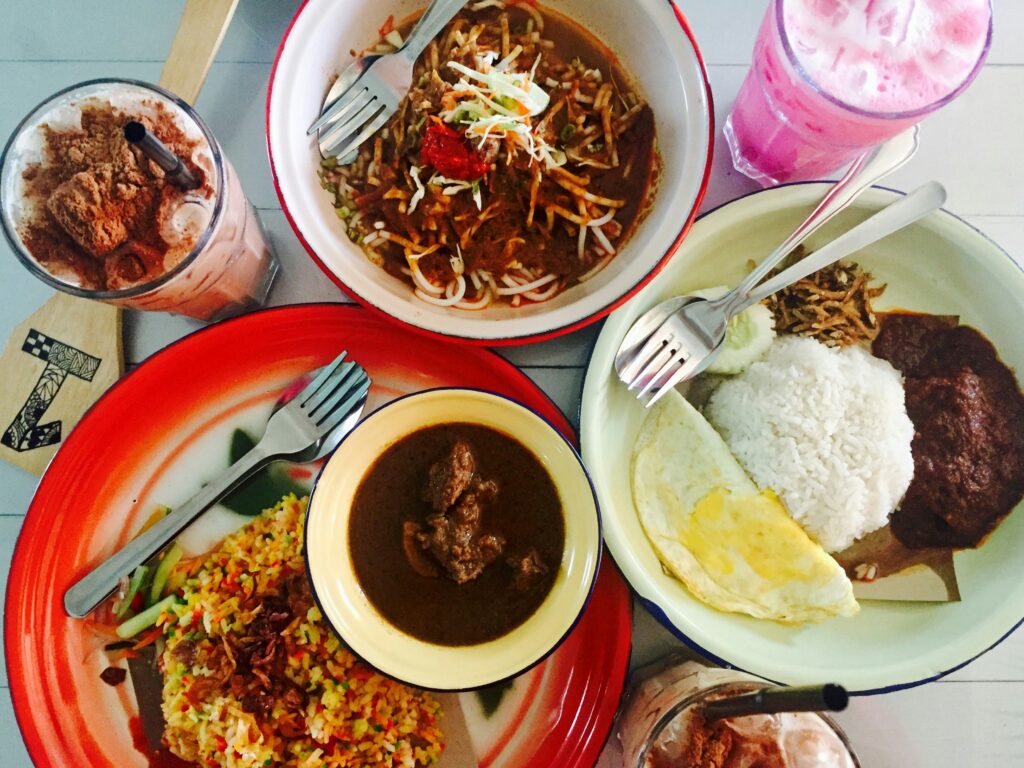
Hugging the east coast of Peninsular Malaysia like a plump shrimp, the state of Terengganu has garnered an unfair reputation as being a backwater in the eyes of the Klang Valley city-slickers.
But what it lacks in overpriced Japanese ramen or influencer cash grabs, it more than makes up for it with some down-to-earth, hearty Malay cuisine.
Beneath its sleepy towns and gorgeous coasts belie a stellar reputation for some of Malaysia’s most mouth-wateringly delicious Malay food!
Are you ready to begin your travels into Terengganu’s tantalizing tastes? Let’s go!
Nasi Dagang
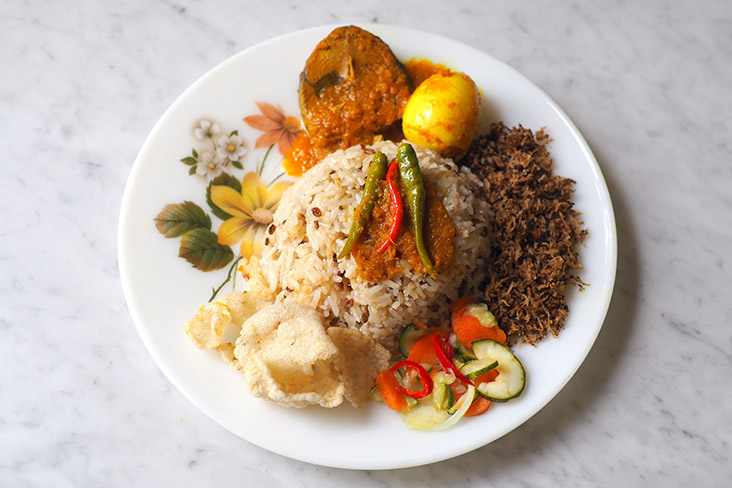
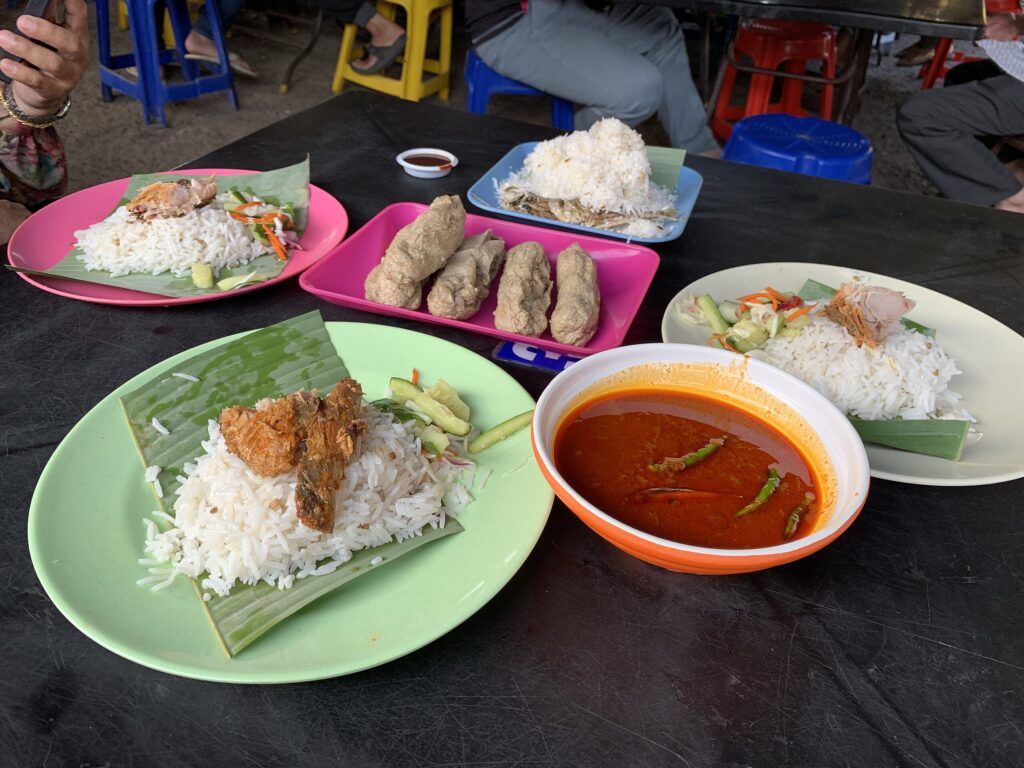
If there ever was a candidate for the king of East Coast cuisine, then it must be nasi dagang or “trader’s rice”.
This maelstrom of fragrance and flavour is usually made by steaming rice – sometimes more than once – in creamy coconut milk. Then, an East Coast spin on curry called gulai darat is added, featuring fish or chicken stewed in a dizzying array of spices like turmeric, lengkuas, lemongrass and ginger. Top it off with some Malay pickled veggies called acar, and you have a hearty and unforgettable meal!
Popular in the East Coast states of Kelantan, Pahang and of course, Terengganu, nasi dagang can even be found up north in Thailand’s Pattani and Yala provinces.
But ask the locals, and they’ll usually swear by a local place called Nasi Dagang Atas Tol. Although it has a branch within the state capital Kuala Terengganu, it still manages to attract hundreds of hungry patrons to its original store in the village of Kampung Atas Tol more than 10km away from the town centre! And it’s not hard to see why – it still uses good old wood-fed flames to cook its curry, giving it a smoky aroma that’s irresistible.
Laksam
No, it’s not laksa!
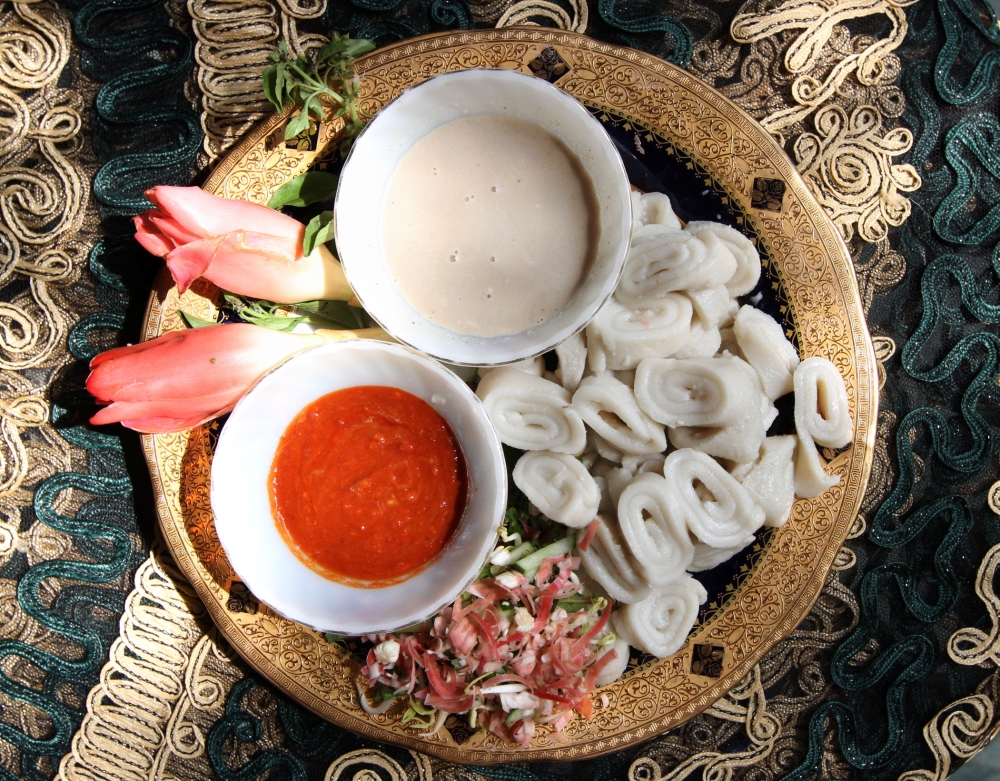
Despite being one letter away from its more famous cousin, laksam is a wildly different dish that showcases Terengganu’s love of fish and coconut milk.
Beginning with cooked rice flour strips that look quite like the Chinese dish chee cheong fun, they are cut up into adorable tiny little rolls.
But what sets it apart are the sauce and toppings.
For laksam sauce, you’ll find a uniquely salty-sweet broth made from fish, coconut milk and sometimes the citrusy punch of the asam gelugor fruit.
After dousing the laksam in said sauce, the next step is to garnish it with some a handful of finely shaved ulam salad greens and a dollop of spicy belacan fish sauce.
These rolls, sauce and toppings combine to create laksam – a humble East Coast dish that both looks *and* tastes like a five-star pasta dish – for a fraction of the price, no less!
Although laksam can be found almost everywhere in Terengganu, there are also plenty of stores that in the Klang Valley that bring this delicious dish closer to home.
Satar
In case you haven’t noticed, Terengganu folk really love their fish!
With the bounty of the South China Sea next door, it’s no big surprise that the day’s fresh catch frequently finds their way into almost every dish!
But nothing symbolizes the humble and straight-shooting character of Terengganu people and their cuisine more than satar fish cake.
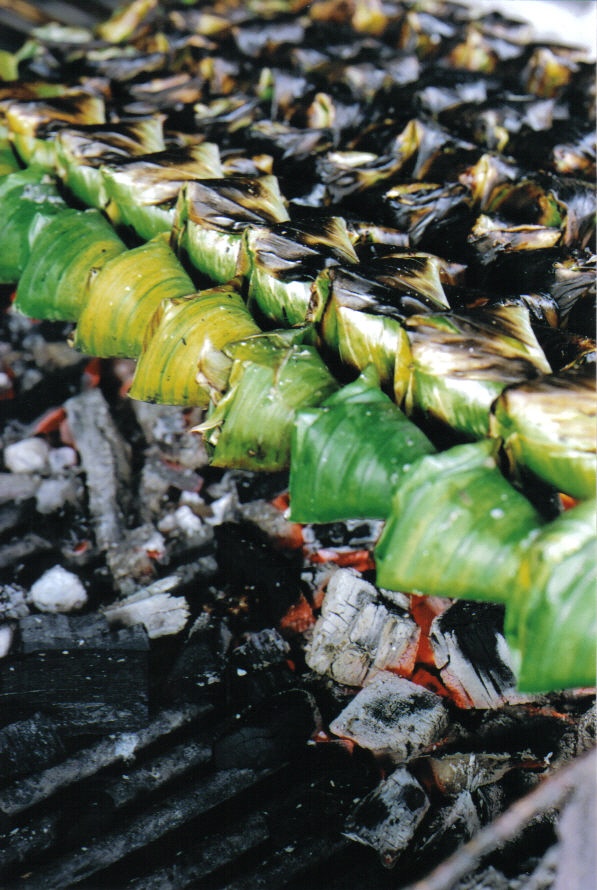
Not to be confused with satay skewers – though they share a cooking method – satar can be found through the savoury, aromatic smoke wafting from Terengganu’s countless roadside stalls or food courts.
Satar starts with a blend of fish paste, spices and coconut (sensing a theme here?) that gets wrapped in a banana leaf before being barbequed by the dozen in giant skewers over a charcoal flame.
And that’s it! The result is a smoky and savoury triangular fish cake – akin to ketupat rice – that goes great by itself or with a main dish.
Keropok Lekor
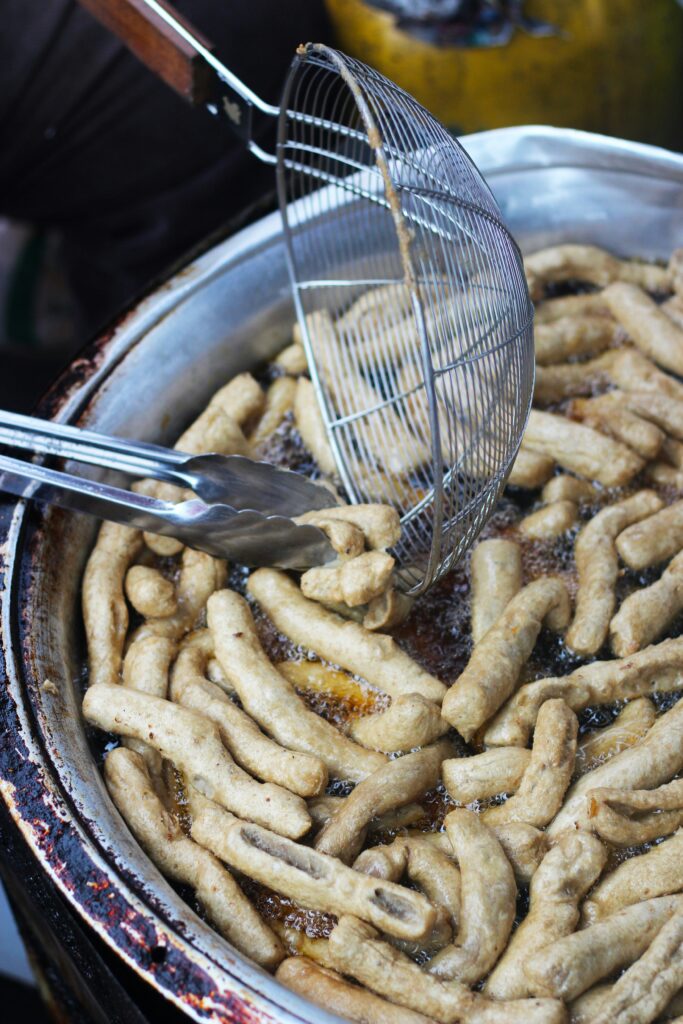
Why bother with fish and chips when you can have both in one convenient package called keropok lekor?
An evergreen Terengganu specialty, keropok lekor is a long, brownish snack that’s made from fresh fish paste mixed with sago flour, resulting in a sausage-like delicacy that’s won a legion of fans stretching all the way from Kuala Terengganu to Kuala Lumpur.
Depending on whether it’s steamed or deep-fried, keropok lekor will give you a softer or chewier texture. When paired with some homemade sweet chili, it transforms into a bundle of salty goodness topped off with just the right tinge of fatty umami – the perfect snack to keep the munchies at bay.
Besides buying freshly fried lekor to chow down on, you can also bring some home in the form of shrink-wrapped or frozen bundles from various local Terengganu stores. Once you’re in the kitchen, get a wok full of oil to fry some up for yourself!
Nekbat
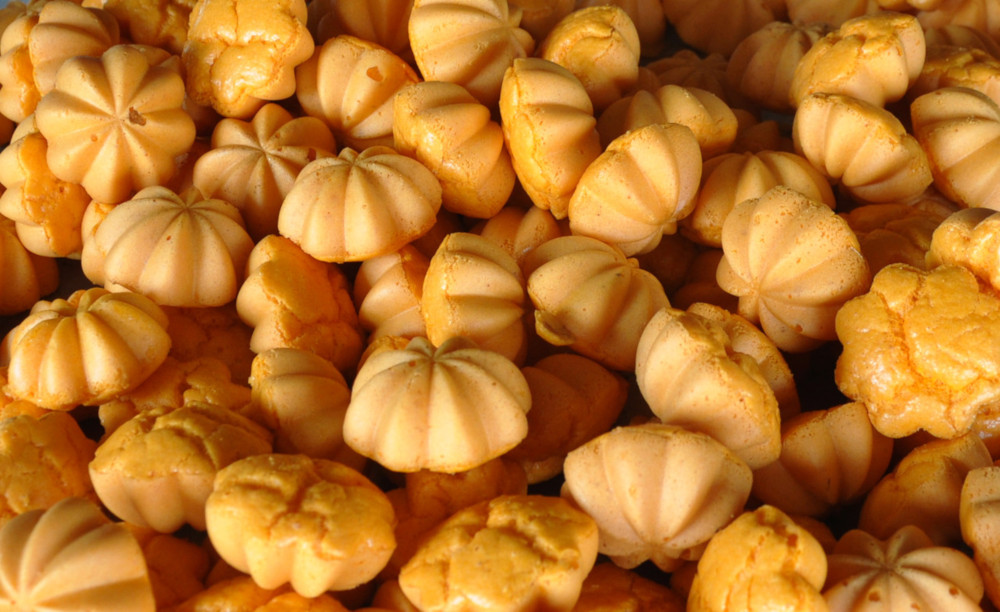
Diet fanatics beware! If there’s one thing Terengganu folk love more than fish and coconut milk, it’s got to be sugar!
East Coast cuisine is filled with syrupy sauces, sugary rice and, of course, sweet desserts such as the bundles of joy called nekbat.
Nekbat is a made from a rather simple batter of flour and eggs which is then baked to a golden colour, or orange if there’s food colouring. Soft but bland, these dry, hardy nekbat can last months and not too far off from unflavoured sponge cake.
But then comes the sweetness. After boiling water mixed in with sugar and pandan leaves, the nekbat are poured in and left to soak in that fine syrup. When they’ve grown sufficiently plump, then it’s time to savour one of Terengganu’s most cherished desserts!
When you’re longing for something to cleanse that salty keropok lekor or hearty nasi dagang you just had, these little clamshells will be your saviour!
Now that you’ve had a quick look at the vast world of Terengganu cuisine, were they any that left you drooling? If not, why not look further afield for some of Hong Kong’s must-try foods or enjoy some Viennese hospitality at their cozy coffeehouses? Or if you’re looking for more sweet tooth delights, sink your teeth into this guide to the sweetest Japanese desserts!


