
If you’ve been anywhere near a movie theatre or film buff lately, you’ve likely heard rave reviews (and memes) about The Odyssey.
Directed by superstar Christopher Nolan, The Odyssey (2026) is an almost three-hour long marathon that adapts the classical epic Greek poem with the auteur director’s signature Hollywood panache.
Famous for his ambitious productions, The Odyssey was naturally filmed in various locales in the Mediterranean and beyond.
So, if you’re feeling Odysseus fever and want to know where most of the movie was filmed, read on:
Fact & Fiction
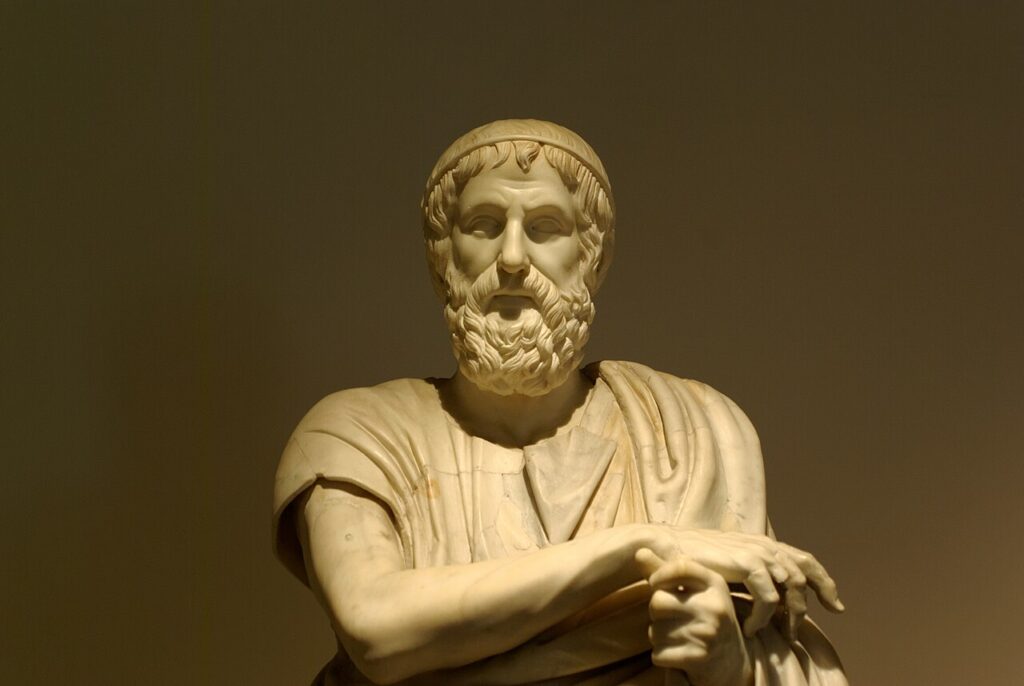
Before we begin, what is the Odyssey? And do the places in it actually exist?
Composed between the 800-600 BC and traditionally attributed to the poet Homer, the Odyssey depicts the warrior king Odysseus and his herculean 20-year journey throughout the Mediterranean to win the Trojan War and reunite with his wife Penelope.
Although the poem depicts the Greek Peloponnese and Ionian islands while mentioning other Mediterranean city-states and kingdoms, no route based on it can be 100% mapped onto real life.
In fact, scholars still debate whether Homer (or the various oral traditions) involved even wanted the poem to be realistic.
And thus, it’s no wonder that Nolan took a similar approach, choosing to base his Hollywood retelling in both traditional Mediterranean settings alongside wildly anachronistic and inaccurate – but thematically or aesthetically fitting – locations.
Greece
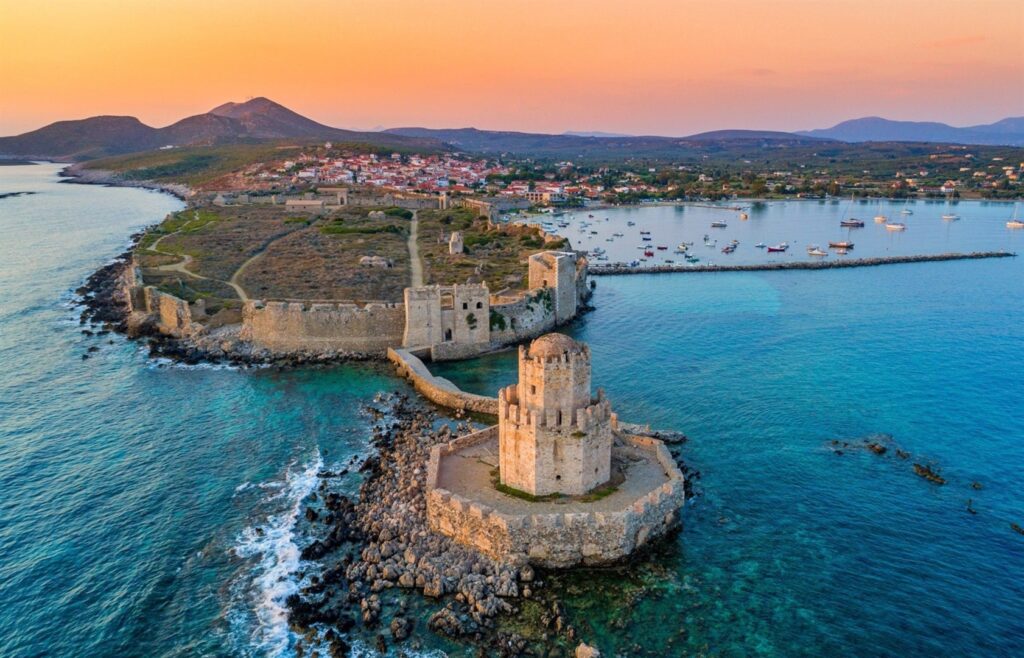
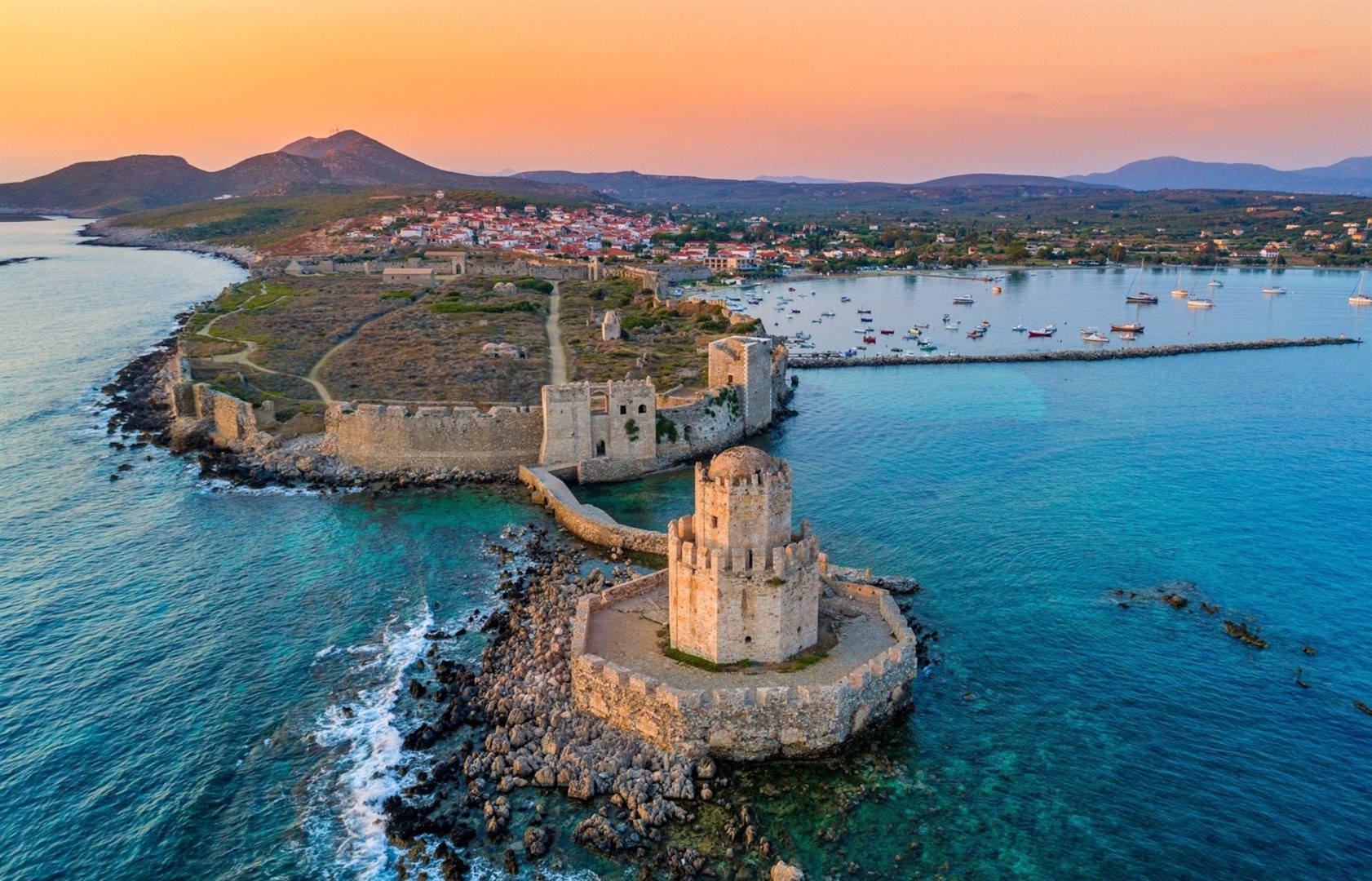
Seeing as it’s a Greek epic, Nolan would have been crazy NOT to use the photogenic islands, beaches and forts of Greece.
Jutting out to the southwest of mainland Greece, the Peloponnese was Odysseus’ homeland and major filming site for the movie.
In the southwestern Messinia region, this blend of natural and historical beauty is so renowned that overtourism has recently become a problem. (Here’s how you can fight against overtourism as a responsible traveller)
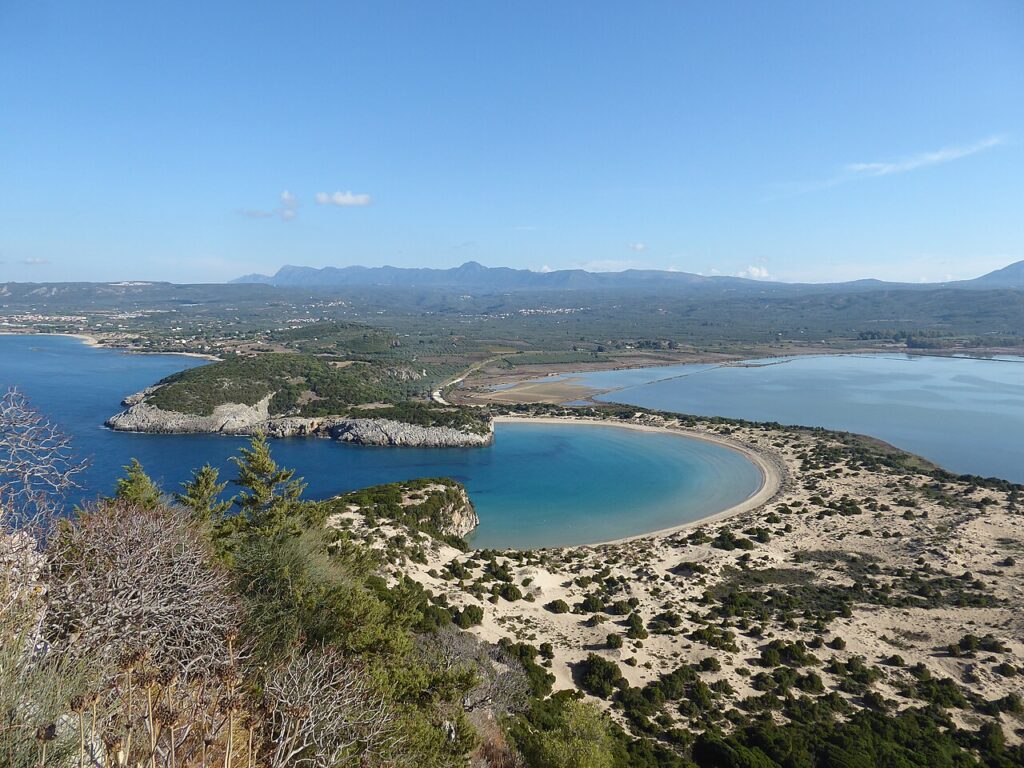
Back to the Odyssey, both the picture-perfect sands of Almyros Beach and the miraculously horseshoe-shaped Voidokilia Beach graced plenty of scenes in the movie. Just a few kilometers south is Methoni Castle, Venetian fort that juts out spectacularly into the ocean in a scene that screams cinematography gold!
Keen-eyed visitors to the area might also spot an ominous entrance beneath a giant outcropping called Nestor’s Cave. Enter it, and you’ll see the very place where Nolan depicts Odysseus – played by Matt Damon – confronting the cyclops.
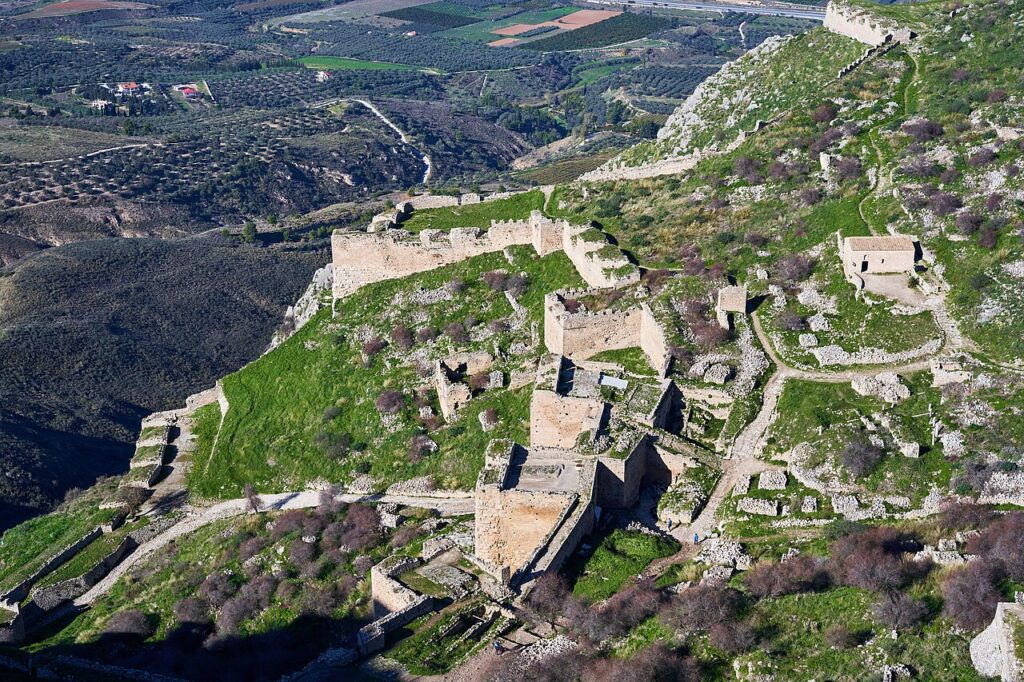
To the northeast of the Peloponnese, the sprawling fortress of Acrocorinth that once overlooked the ancient city of Corinth also featured prominently in the movie. In fact, it’s so old that it’s the second oldest inhabited building in Greece, just behind the Acropolis!
How to Get Here
From Kuala Lumpur International Airport (KLIA), fly to Athens to Athens International Airport via Riyadh or Jeddah. Then, either fly to Kalamata International Airport or drive to Messinia.
Morocco
A huge part of why Odysseus leaves his wife Penelope for 10 years is the Trojan War, a legendary war between the city states of Greece and Troy.
Although scholars generally agree that the historical Troy is in modern-day Turkey, the movie takes one of its many creative liberties by moving Troy to the opposite end of the Mediterranean to Morocco.
At Essaouira, Nolan chose to depict the scenes of the Trojans discovering the famed Trojan horse and Odysseus’ fateful departure for home on its pristine sands.
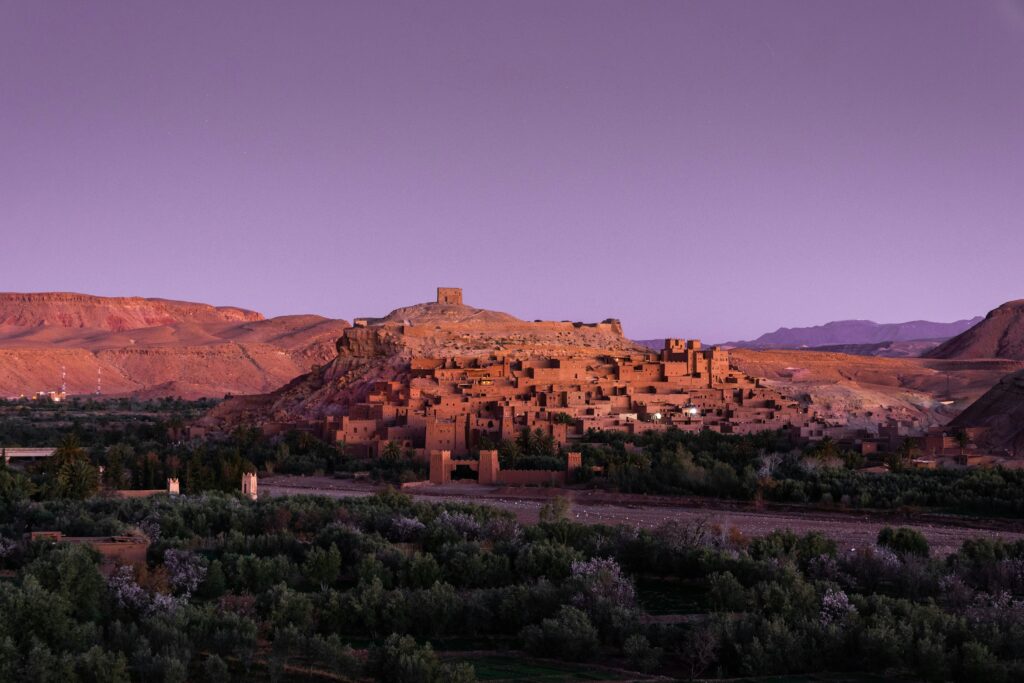
Meanwhile, further inland, the ancient mudbrick houses and their imposing silhouette of Aït Benhaddou served as a stand-in for the ill-fated city of Troy. Listed as a UNESCO World Heritage Site since 1987, this ksar or fortified village is a marvellous feat of clay construction in the Moroccan style.
Avid moviegoers might even recognize this UNESCO World Heritage Site, all thanks to its starring role in other Hollywood blockbusters like Gladiator (2000), Game of Thrones and The Mummy (1999)!
How to Get Here
From KLIA, fly to Marrakesh Menara Airport via Istanbul or Doha. Then take a bus or taxi to Essaouira. For Aït Benhaddou, drive or take a bus from Ouarzazate or Marrakesh.
Italy
Doubling back to the Mediterranean, we come to Nolan’s next muse – the southern Italian island of Sicily.
Thanks to its relatively close distance to the Peloponnese, Greek kingdoms have had long and deep ties to it. This was probably why Nolan chose it as the setting for Odysseus’ island kingdom of Ithaca instead of the actual Ithaca back in Greece.
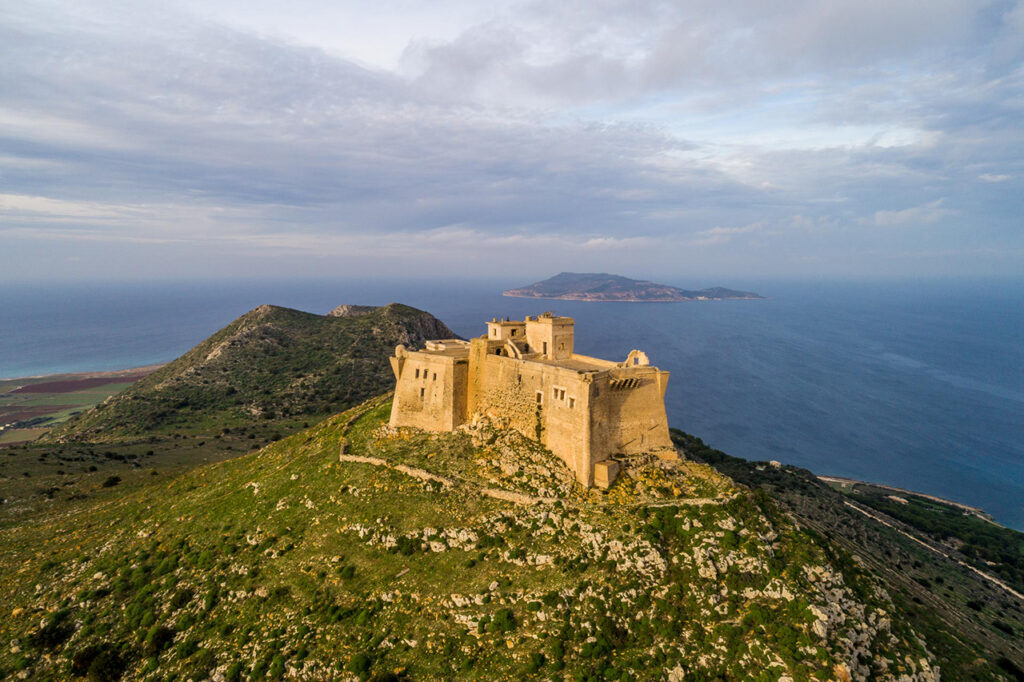
On the island of Favignana (Goat Island), Anne Hathaway’s Penelope and Tom Holland’s Telemachus endure a long and gruelling wait for their patriarch Odysseus among the commanding heights of Castello di Santa Caterina or Saint Catherina’s Castle.
Named after an Italian saint, the castle was once a Muslim fort that was renovated and expanded over the following centuries by the Ottomans and Greeks, no doubt thanks to its remote and strategic location. In fact, the castle was so rural and inaccessible that the cast had to hike up every single day for shoots!
Fittingly, the Lipari and the Aeolian Islands to the east were filmed as the lands of King Aeolus, the guardian of the winds. It was here where Odysseus receives a bag of wind from the king that later blows him off course into further misadventures.
How to Get Here
From KLIA, fly to Palermo Airport. Then, take the Autoservizi Salemi Bus 5129 or Segesta Autolinee SE01 to Marsala. Then, take a Liberty Lines ferry to Favignana Island. Castello di Santa Caterina is about an hour’s hike from the ferry terminal.
For Lipari, fly to Catania Airport. Then take a bus to Reggio Calabria Port via Villa San Giovanni. Finally take a Liberty Lines ferry to Lipari.
Iceland
Iceland’s wet, cold and barren tundra may seem like the worst place to film your sunny Greek epic, but leave it to the maestro Nolan to come up with a fitting scene and setting!
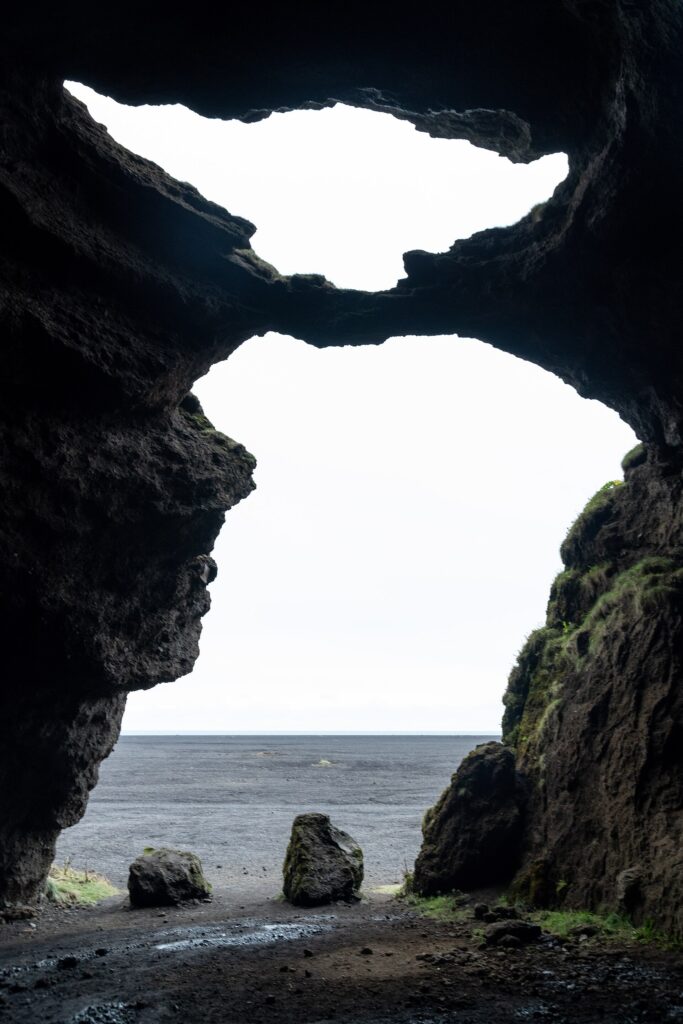
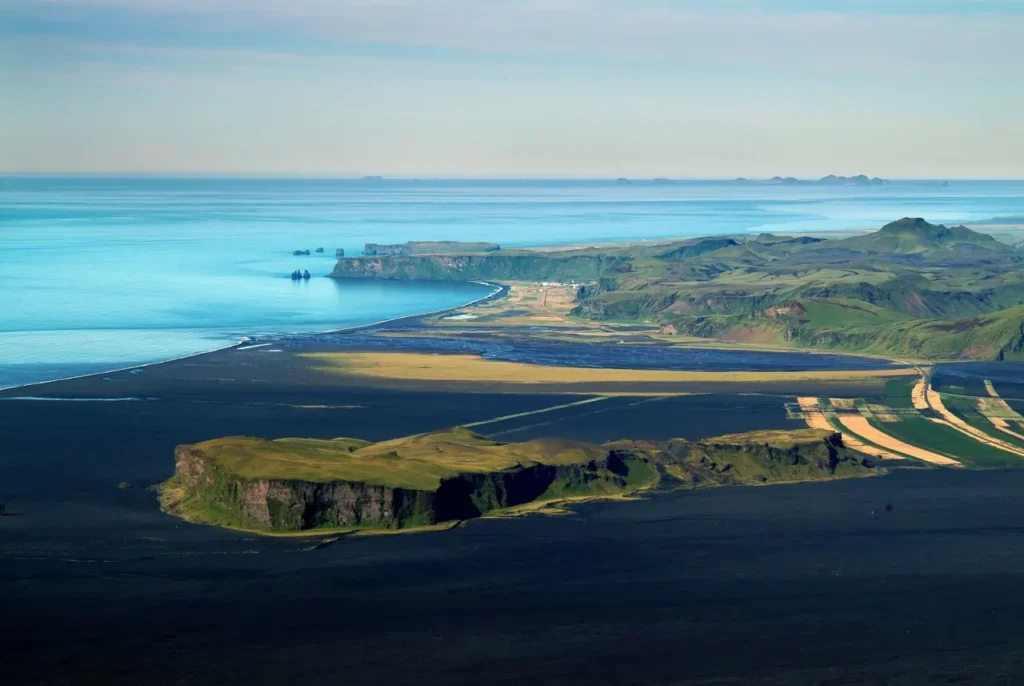
This time, the black volcanic sand and barren wastes of Hjörleifshöfði make the perfect backdrop for the Greek underworld of Hades, an otherworldly dimension which Odysseus must brave to find the spirit of the prophet Tireasias. Here, Zendaya also makes a cameo as the goddess Athena; hopefully, she would’ve had time to visit the amusingly named Yoda Cave or Gígjagjá Cave nearby.
Staying in southern Iceland, the Viking ship used during the film was also spotted making a stop at the lonely port of Landeyjahöfn. Further upriver, the rugged gorges and flood plains of the Markarfljót River add a further layer of dreamy purgatory to Odysseus’ journey.
How to Get Here
From KLIA, fly to via Reykjavík via Dubai or Doha. Then, drive east for about 2 hours via Route 1 to reach Landeyjahöfn port. Markarfljót is a bout 45 minutes northeast.
To reach Hjörleifshöfði and the Gígjagjá Cave, continue driving east from Landeyjahöfn for about another hour.
Scotland
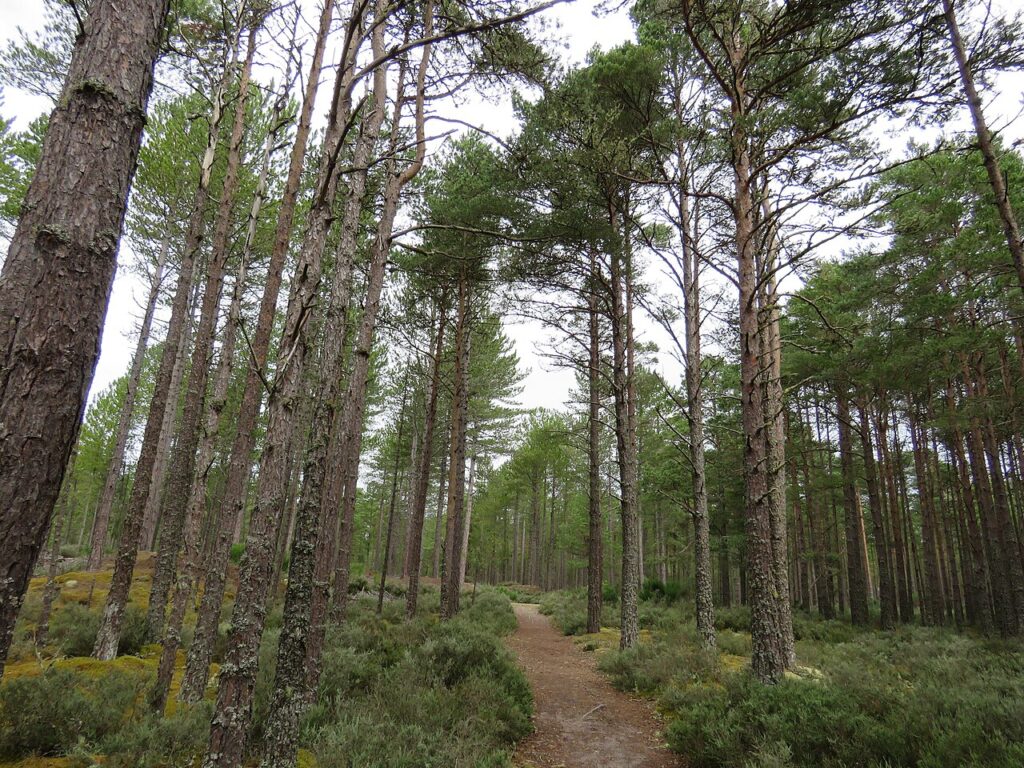
Better known for its rugged and fiercely independent highlands, Scotland played a leading role in the movie’s most climactic and iconic scenes.
Featured prominently in posters and trailers, the armored giants that Odysseus and his crew battle stand amidst the claustrophobic cathedral of Scottish pine trees known as Culbin Forest.
Here on the northeastern coast of Scotland, dense colonies of tall, straight pines blot out any light and any decent visibility beyond a few feet, heightening the dread and threat faced by Odysseus.
Add to that patches of sand from the encroaching coastline and you have a fitting stage for a swords and sandals epic. As if that wasn’t enough, local legend says that a condemned witch apparently cursed the area, resulting in a huge 1694 sandstorm that buried dozens of farms.
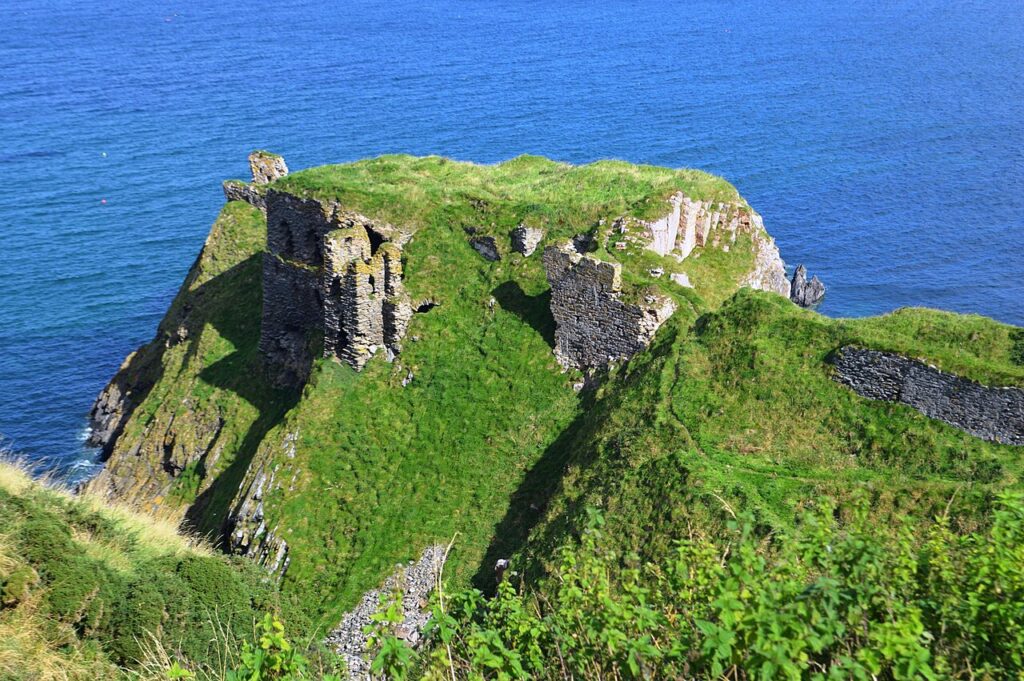
Next, head east and you’ll eventually run across the ruined husk of Findlater Castle, a remote and precarious castle built and fought over by various Scottish kings and nobles. After years of abandonment, only its hollow underground rooms are still left standing.
Here, next to a nearby path, Nolan chose to set the lair of one the Odyssey’s most infamous antagonists – Circe. Played by Samantha Morton, the crafty witch turns Odysseus’ men into pigs with her magical potion.
How to Get Here
From KLIA, fly to Edinburgh. Then, take the train or drive up north to the town of Forres. The trailhead to Culbin Forest is about 12 mins drive from the city center.
For Findlater Castle, take the bus/rail or drive to Cullen. The car park entrance to the castle should be a 45-minute drive away.
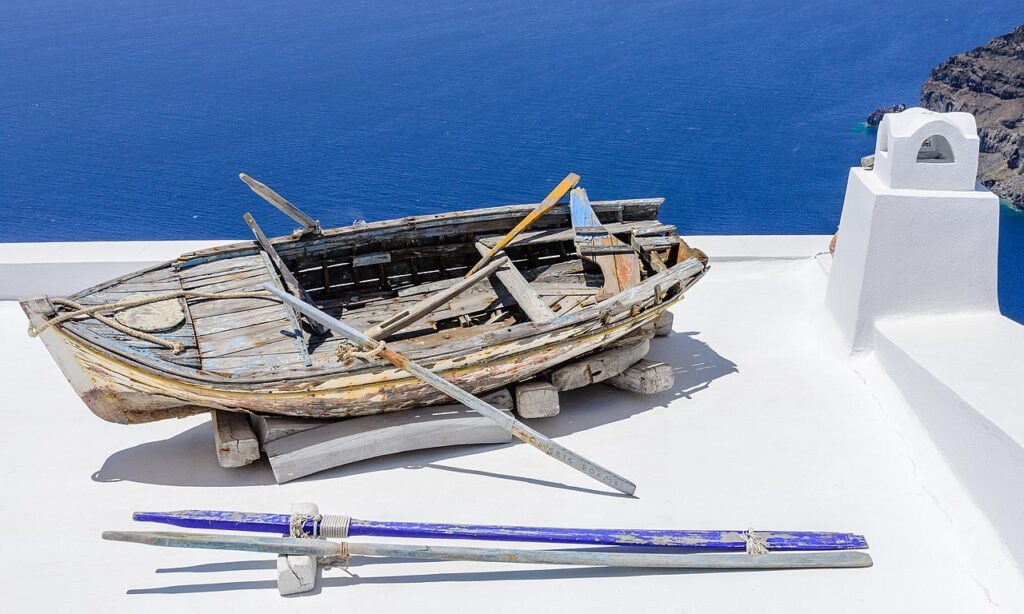
Ready to go on an Odyssey of your own? Check out these budget autumn destinations in Europe or remote alpine wilds of Northern Xinjiang
Links
Town&Country – A Guide to the Filming Locations in The Odyssey
https://www.townandcountrymag.com/leisure/travel-guide/a73192532/the-odyssey-filming-locations/
Vogue – The Odyssey’s Filming Locations Double as an Epic Travel Guide
https://www.vogue.com/article/where-was-the-odyssey-filmed
Changing face of the Peloponnese: backdrop to The Odyssey braces for tourism surge
https://www.theguardian.com/artanddesign/2026/jul/20/peloponnese-greece-the-odyssey-tourism-development-environment
The strange history behind Scotland’s ‘Odyssey forest’
https://www.bbc.com/news/articles/c4gy4epd487o


_Museo_Archeologico_Nazionale_di_Napoli_(inv._6126)_BW_2013-05-16.jpg)


